Showing posts with label Mitsubishi G4M "Betty". Show all posts

Thursday, 27 November 2025

Mitsubishi G4M "Betty", 732Kokutai - video


The source of today's video is the Facebook. It's a beautiful and very clear video but unfortunately no details regarding the date and place were included. Nevertheless, the featured Mitsubishi G4M "Bettys" all belong to the 732 Kokutai as indicated by the number "32-" on the tail.

Leading "Betty" expert Kobayashi-san commented:
"The video shows early torpedo attack training scenes from the 732nd Kokutai. The 732nd was the unit responsible for the southwestern theatre. They were based at Ayer Tawar airfield on the Malay Peninsula. A collection of photos appears in DNK's “Sea Eagles of the South Seas”. But these are remarkably clear images. The interesting thing is the serial numbers, like “732-202”. Attack aircraft usually have serial numbers starting with “3” in the lower section [i.e. "-302"]. The aircraft itself is a late-model Type 11, recognisable by the tail gunner's position being cut away."

The 732 Kokutai was primarily focused on defending the Dutch East Indies, and, as a land-based attack aircraft unit, engaged in bombing, assault, and reconnaissance operations during the latter stages of the Pacific War.
The 753 Kokutai, which had been tasked with bombing missions from the Eastern Dutch East Indies towards the strategic Darwin area in Australia, found itself confined to the Kendari airfield on Celebes Island since the start of the war, with no time for reorganisation. However, by the latter half of 1943, its combat strength had diminished, making its replacement necessary. Consequently, the newly formed unit was the 732 Kokutai. Adequate training time was secured, with deployment to active duty planned for the spring of 1944. However, to counter the reinforcement of the Royal Navy's Eastern Fleet, the unit was deployed to the Western Indian Ocean theatre before training was complete. 

1943
October 1: Formed at Toyohashi Airfield, with Oita Airfield as its parent unit (authorised strength: 36 Mitsubishi G4M "Betty" Land-Based Attack Aircraft). Placed under the direct command of the Southwest Area Fleet's 13th Air Fleet; training commenced immediately.
November 19: Advance base personnel dispatched to Singapore.
December 1: Advance detachment of 31 aircraft departed Toyohashi for Ayer Tawar Airfield, Malay Peninsula. Arrived 12th, continuing training. [Probably the place and date of the video]
1944
Late February: Commenced preparations for mine laying operations targeting British naval ports along the Bay of Bengal coast.
March 26: Enemy carrier fleet approaches Palau Islands. Advances to Kendari for interception. Bengal Bay mine-laying operation cancelled.
March 31: Following the previous day's Palau air raid, receives order to move to Davao airfield, Mindanao Island.
April 9: Advance destination changed from Davao to Degos airfield; movement to Degos completed on the 12th.
April 23: Following the commencement of the Hollandia ground battle the previous day, undertook three consecutive days of relief bombing with 10 aircraft (Operation Z1). Eight aircraft lost.
April 27: "Operation Z1" suspended; returned to Degos.
May 10: Left 12 aircraft at Degos and advanced to Sorong Airfield at the western tip of New Guinea Island.
May 11: Sorong Detachment bombed Hollandia with 8 aircraft; 5 reached target.
May 13: Six aircraft headed for the second Hollandia bombing but all turned back.
May 14: Hollandia relief operation cancelled. Sorong detachment returned to Degos.
May 17: "Operation A" ordered ["Operation A", a defensive strategy for the Mariana Islands area]; deployment preparations commenced.
May 27: "First Operation Kon" launched ["Operation Kon" was a three-phase Pacific War operation to support the Battle of Biak Island]. Advanced to Wasile Airfield, Halmahera Island.
May 29: 10 aircraft launched anti-ship attack; no results achieved, four aircraft lost.
May 31: Seven aircraft launched anti-ship attack, no results achieved, one aircraft lost.
June 3: Three aircraft bombed enemy camp on Owi Island. "First Operation Kon" suspended.
June 5: "Second Operation Kon" launched. Two aircraft conducted night bombing raid on Wakde Island (732nd Air Group's final sortie). Operational aircraft depleted.
July 10: Unit disbanded.
Unable to recover from incomplete training, the unit was committed in full to "Operation Kon" and annihilated. After disbandment, personnel were absorbed into the ground staff of the Hohoku Naval Air Group, which itself did not survive until the end of the war, disbanding in May 1945. Personnel undergoing training in Toyohashi were subsequently reassigned to units such as the newly formed 763rd Kokutai.

Two ships can be seen in the video. The first, is either cruiser Kitakami or Oi, Kuma-class light cruisers. In my opinion it's Oi.

Between mid December 1943 and March 26, the time period we believe the video was shot, both Kitakami and Oi are in the area, based in Singapore and are training at Lingga Islands just south of Singapore. So, time and place fit the whole set up of the video. Kitakami was hit by the submarine HMS Templar on 27 January 1944, and returned to Japan. So the video had to be shot either before January 1944 or the cruiser in the video is not Kitakami.

I believe the second ship seen in the video is the Cruiser Aoba. As with the other two cruisers, she is in the area, based in Singapore and spent some time training in the area. Aoba arrived at Singapore on December 24, 1943. Until January 23, she is ferrying troops to Malaya and Burma without either Oi or Kitakami. The only time she is with them is during the troop transport to Adamand Islands starting from January 23, when Kitakami is torpedoed. Personally, I don't think there was any time for training during that trip. 
After that date Aoba is with Oi from March 1, 1944, during Operation "SA No. 1" that involves commerce raiding in the Indian Ocean. As we saw in the history of the 732Ku in "Late February: Commenced preparations for mine laying operations targeting British naval ports along the Bay of Bengal coast." The setting fits, the ships are going for a raid in the Indian Ocean and the 732Ku is training for missions in the same area. Therefore, my conclusion is that the most probable date for the video is some time between March 1 and 9, 1944, when the ships were on their way to the Indian Ocean and passed in front of Ayer Tawar; after that date,  Aoba reaches Jakarta, Java Island on March 15.

Monday, 21 October 2024

Mitsubishi G4M "Betty" Photo Mission 一式陸上攻撃機 - video


In this clip from the NHK collection, dated August 18, 1942, a Mitsubishi G4M is taking off from Rabaul on a photographic mission, showing the whole process. 
Some interesting stills:
Note that none of the "Betty" crew members wears any parachute or life vest.
During an interview with a "Betty" pilot that flew around the same time and in the same area, the veteran explained to us that they almost never wore any parachutes because the majority of the missions they flew were from a low altitude and they wouldn't have the necessary time or altitude to deploy parachutes if they jumped out of their bomber. Furthermore, there were never enough parachutes and in any case, when they encountered enemy fighters and couldn't escape they prefered to make emergency alightments (land on water) and they swim to safety than jump from high altitudes, risking getting shot at. Yes, surprising as it may sound to some, that happened.

In this still we can clearly see that the "Betty" is a G4M1 Model 11. The frame of the side window also indicates that the particular aircraft has a serial number higher than s/n#123, from when this new side window frame was adopted.

As we can see Tonavumbatur (known to the Japanese as "Aneyama") and Tavurvur ("Hanabukiyama") on the left and the edge of the airfield is right by the sea, then I can say that the airfield is Rapopo, which mostly IJAAF bomber units operated from. I'm pretty sure some of you will dissagree, so feel free to leave a comment and correct or confirm me.

Here's the bombardier taking aim with a Navy Type 90 Bombsight in order to guide and bring the aircraft over the target. When he raises his hand he signals the camera operator to take photos.

I believe that in this frame the same bombardier is telling to pilot to make one more pass over the target area.

In this rather dark still, we can see the camera operator loading a fresh film/plate on his Navy Fixed Aerial Camera K-8 type.
According to this :
The Fixed Aerial Camera K-8 type (固定式航空写真機K-8型) was made for the Japanese Navy by Rokuoh-sha, later Konishiroku. It was a copy of the Fairchild K-8, of which some examples were bought before the outbreak of the Pacific War.
The camera takes 18×24cm pictures on film rolls 24cm wide and 24m long, allowing for 100 exposures and loaded in interchangeable magazine backs. It is equipped with a leaf shutter. The camera is remotely controlled and needs 12V electrical power supply.
The camera was available in two main versions, differing by the lens unit. One has a 50cm f/5 lens (presumably a Hexar) and 1/50 to 1/100 speeds, for vertical pictures taken at altitudes from 20,000 to 30,000 feet. The other has a Perigon 25cm f/4.5 and 1/50 to 1/150 speeds, for use at altitudes from 13,000 to 23,000 feet. (The name Perigon certainly indicates that this is a wide field lens.) Both versions were used in the C6N Saiun (Myrt) reconnaissance plane. A special mount grouping together three 25cm K-8 at vertical and oblique angles was tested but apparently not operationally used.
The complete 50cm K-8 set consists of the main camera with lens unit and film magazine, two spare magazines, two intervalometers, an optical sight and a repair kit. Various outfits are pictured in the 1945 American report cited above, and a 25cm K-8 with Perigon lens and airframe mount is displayed at the Smithsonian National Air and Space Museum.

What could the big "tube" like thing on his left side be?

In these illustrations from FAOW#59, we can see the special window that only G4M1s had for photographic missions and we can visualize where the camera operator squeezed in to take photos; under the cockpit. The bombardier's window is not shown in the top G4M1 illustration but it is shown in the lower G4M2 illustration.
Would you like to check if your G4M1 kit, especially the latest from Sword has the photo window?

I'm not 100% sure but I strongly suspect this part of the film is from stock footage since the cameraman was sitting in the front end of the "Betty" with the bombardier and the camera operator. Nevertheless an interesting view of the cockpit.

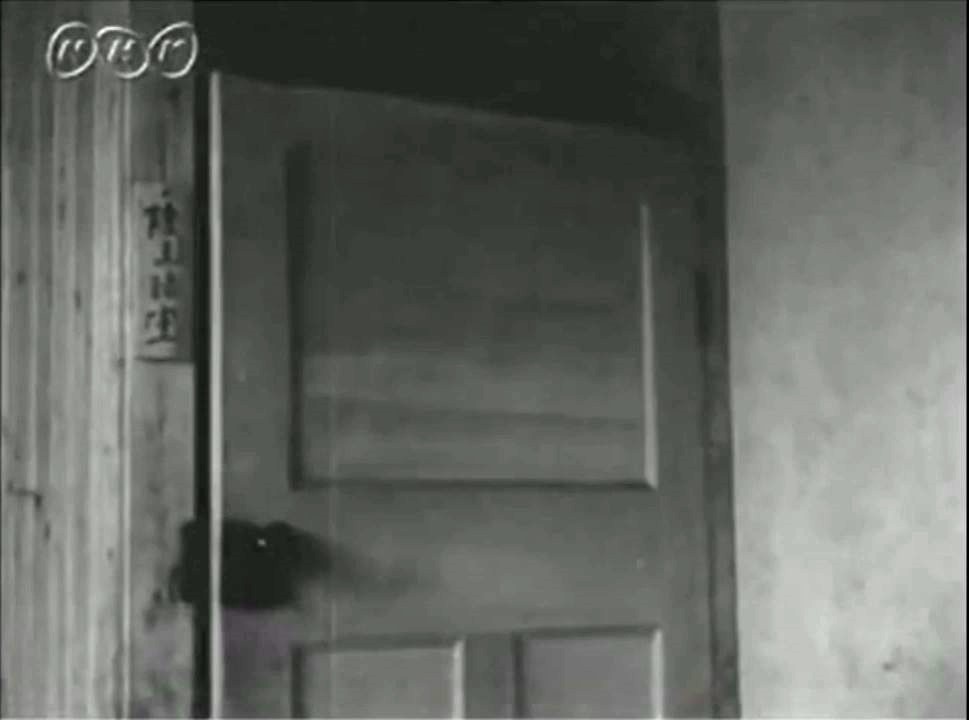
This is most probably the darkroom in Rabaul where the film was developed.
日本語読める人、ドアの表札に何て書いてあるかな?〇〇暗室?

Friday, 21 June 2024

Japanese Airfields, Equipment & more #12 - revised

IJAAF & IJNAF crank engine starter or inertia starter
To be honest, I can't remember ever seeing a Japanese aircraft model with a crank starter sticking out or even placed on the ground. A very small detail that would make any model a little bit more realistic.

Wiki says: 
"An aero engine inertia starter uses a pre-rotated flywheel to transfer kinetic energy to the crankshaft, normally through reduction gears and a clutch to prevent over-torque conditions. Three variations have been used, hand driven, electrically driven and a combination of both. When the flywheel is fully energised either a manual cable is pulled or a solenoid is used to engage the starter."

Ground crew using a crank starter on a Tachikawa Ki-36 "Ida" ground attack and liaison aircraft.

Same scene but this time the aircraft is a Mitsubishi Ki-46 "Dinah".

I bet you didn't know that the Nakajima Ki-43 "Hayabusa" (Oscar) had the crank starter hole inside the starboard wheel well.
One more "Hayabusa" photo, this time a 64 Sentai fighter.

This photo of a Kawasaki Ki-100 gives a very clear image of an IJAAF crank starter.

With the IJNAF fighters, very often, the crank starter was placed in the undercarriage leg as depicted by illustrator Sato Kunihiko in Model Art #857 or Profile #13.

This practice was not uncommon with the Mitsubishi J2M "Raiden" (Jack) too.

Or it was casually placed on the tarmac, like in this photo of a Zero.

A Mitsubishi G3M "Nell" and a Mitsubishi G4M "Betty" have their engines started by crank starters.

A short clip showing a Navy Type 90 Crew-trainer or Mitsubishi K3M "Pine" having its engine started. This is the only video I could spot where the sounds of the flywheel and the starter can be clearly heard.

The girls we saw in a previous post, here, start the engine of a Mitsubishi Ki-46 "Dinah".

Monday, 17 June 2024

Japanese Airfields, Equipment & more #9 - revised

Tarps & covers
IJAAF & IJNAF ground crews used tarps to protect their planes from the elements, especially the engine area. When the aircraft were maintained or were ready for take-off, these were removed and discarded on the ground near the aircraft. As the attached photos show, sometimes the ground crews were more tidy and neatly folded them, and sometimes just casually threw them around.

In this photo, tarps cover the cockpit, cowling and propeller of a Nakajima Ki-27 "Nate". The number "157" applied on the cowling cover and the propeller is the same with the serial number of the aircraft.

In this photo, the number painted on the tarp cover is the number on the tail of the Nakajima Ki-44 "Shoki". Perhaps also part of the serial number of the aircraft?


Neatly folded tarps beside a Kawasaki Ki-45 "Toryu" (Nick).

When tarps were unavailable, other fabric covers were incorporated as this photo of a Nakajima Ki-27 "Nate" testifies. But these really depended on the theatre and the time. Home-based units, for example, are never seen without proper tarps.

Of course, IJNAF also used tarps to protect its aircraft from the elements. Note how neatly wrapped and tied the tarp is on this Mitsubishi G45M "Betty" bomber. Note also the barrels, mentioned in a previous post, that helped the ground crew reach the engines.

Similarly a Mitsubishi G3M "Nell" is having its port engine maintained while the starboard is still covered with a tarp.

A variety of IJNAF aircraft with their cowling under tarps of different colour found at the end of the war at Oppama Base, Yokosuka.

As we saw before, the IJNAF too used various fabric covers to protect its aircraft. In this case, the cowling of a Mitsubishi A6M7 Model 62 or 63 of the Yatabe Kokutai is under a quilted cover.

A short clip taken in Rabaul, featuring a Mitsubishi G4M "Betty" bomber getting serviced as well as an Aichi D3Y "Val". Note the tarps, the barrels and the platforms mentioned in earlier posts.

Sunday, 16 June 2024

Japanese Airfields, Equipment & more #8 - revised

Engine cranes
IJNAF and IJAAF used improvised cranes to hoist and change the engines of their aircraft. Usually comprised of two or three wooden poles or tree logs, they actually came in a variety of configurations.

Two photos featuring Nakajima Ki-27 "Nates" having their engine removed. The crane configuration on the right was quite uncommon and to be honest, doesn't look very trustworthy, while the one on the left was more frequently used.

This photo from a January 1943 magazine features a completely different engine crane design.
The vintage article is about the IJAAF fighting from Burma, over the India border, so, although the tail marking is not visible, this Nakajima Ki-43 "Hayabusa" (Oscar) very possibly belonged to the 50th Sentai.

The classic engine crane configuration is seen in this photo featuring Nakajima A2N fighters and Nakajima E4N3 reconnaissance of the Sasebo Kokutai. Note the work platforms, mentioned in previous posts and work tables.

Another rather unusual crane comprising four wooden poles lifting the engine of a Mitsubishi A5M "Claude".

In this short clip, Mitsubishi G3M "Nell" bombers are being serviced in mainland Japan. Of interest is the crane used to replace the engine of one of the bombers.

An even more interesting clip shows the port engine of a Mitsubishi G4M1 "Betty" getting replaced using a two-pole crane, somewhere in the South Pacific.

Although seaplanes are beyond the scope of this series, as they don't operate from an airfield, we can't help but include this photo, which we first posted on our blog in 2012, featuring an engine crane. Here is the original caption:
This is a photo from a vintage December 1942 magazine showing a Mitsubishi F1M "Pete" on the beach of a Southern Pacific island with its crew walking away after returning from a mission. Note that the floatplane is resting on its trestle in front of a scaffold usually used for propeller or engine changes.
And an epic comment our friend Jean Barby from France made:
"This island is nothing but the shore opposite of Lakunai airfield in Rabaul. In the middle the "brothers" can be seen, they appeared during the volcano eruption in the early 30's. A long time ago I did a couple of dives there, and there are many wrecked barges at the bottom of the two rocks. There are about 40 shipwrecks in Simpson harbor, the bridge of the closest is 120 feet from the surface, the others are further down. Keep in mind that I was there in 1979, and that there were no decompression chamber in case of bends or decompression troubles. Only single tanks were available thus limiting the length and stay at such a depth. Nevertheless, one Pete is accessible from the shore and is in fairly good condition (probably less now!) Some pretty good wrecks were still in the bush around Lakunai. A Ki-21, remnants of some Ki-43 and of a twin-engine which could be anything from a Ki-46 or a J1N1, and even an in-line engine from a Ki-61 or a D3Y2; all those treasures are now buried under heavy ashes as Rabaul was destroyed by the eruption of the volcano close to Lakunai, the Mother, in 1994. The new capital is now Vopopo; I also went to Tobera and Vanukanau but had little time to investigate."

And a short clip featuring a Nakajima E8N "Dave" floatplane having its engine replaced perhaps in the same location as the previous post.

Saturday, 13 April 2024

Mitsubishi G6M1 by Sakaida Yoji

Tamiya in 1/48, modified by Sakaida-san. 
The kind of model you don't see every day.