Thursday, 20 November 2014

IRUMA KOKUSAI (Iruma Air Show) #2

Boeing CH-47J Chinook


Sikorsky UH-60JA Black Hawk


Wednesday, 19 November 2014

IRUMA KOKUSAI (Iruma Air Show) #1

The subject of this blog is the history of Japanese aviation until about the end of WWII but we can't ignore the JIETAI (Japan Air Self-Defense Force). So since we visited for the very first time the annual air show held in Iruma base on the 3rd of this month, we thought about sharing with you some of the photos we took. Starting with the brilliant Kawasaki C-1s that put up a truly exciting show even though the rather strong wind didn't allow for the scheduled parachute drop.   


Monday, 17 November 2014

Hong Kong Model Competition 2014

The 22nd annual Hong Kong Model Competition 2014 was hosted by the Hong Kong Society of Scale Modelling (www.hkscalemodel.com) and was held at Sheung Wan Civic Center, Central District, Hong Kong.
 
 
Peter Dasso sent us photos of the Japanese aircraft (and more) models in the show and mentioned:
"I was at the Hong Kong model show this weekend, and there were a handful of Japanese planes, so I took some pictures. The Gekko was my own submission, though it didn't win any prizes (one of my other models, a Mosquito, did). The B5N2 was awarded best "Sino-Japanese War" topic. The J7W1 was 1st prize in aircraft, though I personally am not sure it was necessary to put so much weathering on a plane that never saw combat. Hope you like them!" 


Thank you very much Peter for the photos and the report. I agree with you about the weathering on the "Shinden" but the modeller has done an excellent job with the engine. The kit helps ofcourse... Your "Gekko" is really beautiful! Love the huge "Akagi".

Sunday, 16 November 2014

"Hokoku" Ceremonies - #91~120

On October 31, 1937 in Osaka's Second airport and on November 5, 1937 in Tokyo's Haneda airport, "Hokoku" donation ceremonies were held with the support of Asahi Shimbun. The Tokyo ceremony was attended by Prince Fushimi-no-miya who was serving as chief of staff of the Imperial Japanese Navy at the time. According to the vintage magazine article no less than 50 aircraft were named "Zen Nippon-go" (All Japan) but Yokokawa-san's site (here) mentions 30, from Hokoku#91 to Hokoku#120. Some of the types that were donated: Aichi D1A, Mitsubishi A5M2a and Yokosuka B4Y.
 

Friday, 14 November 2014

Mitsubishi G3M2b "Rikko" by István Tekler

I'm sending some photos of my Hasegawa G3M2b "Rikko", built using some scratch items, Eduard PE and Miniworld Type 99 cannon.
István Tekler - Hungary

Excelent model István. Thank you very much for your contribution to our blog.


Wednesday, 12 November 2014

"Teikoku Kaibo Gikai" aircraft

Peter Starkings sent us a follow-up of our post about the "Civilian Nakajima E4N2":
 
The "Civilian Nakajima E4N2" posting on 15 October 2014 gave a fascinating insight into the early years of Japanese fish spotting. It also mentioned the aircraft concerned being named Giyȗ #9 and some further notes on use of the term Giyȗ (unusual in relation to fish spotting) might be of interest.
Numerous surplus/obsolete Nakajma navy aircraft were converted for civilian use and four of these were specifically designated Fisheries Floatplanes, all modified as indicated for J-BABP. The term Giyȗ was applied to them by the concern to which they were initially supplied, namely the Teikoku Kaibo Gikai (Imperial Maritime Defence Volunteer Association), where the term "loyalty and courage" is obviously more relevant. The Association obtained various types of aircraft as follows:
 
Giyȗ #1 Kawanishi K-8B Transport Floatplane J-TUST; loaned to airline Nippon Kôkȗ Kabushiki Kaisha (Japan Aviation Company Ltd.)
Giyȗ #2 Kawanishi K-8B Transport Floatplane J-TUTU; loaned to the same airline as above.
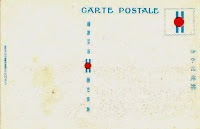
The back of the above postcard with
the marking of Teikoku Kaibo Gikai.


Giyȗ #3 Kawasaki Experimental Flying-boat; Tested by IJN, parts later used for materials research
Giyȗ #4 Kawasaki KDC2 Experimental Transport J-BAKH; loaned to Asahi Shimbun
Giyȗ #5 Kawasaki KDC2 Experimental Transport J-BALH; loaned to Asahi Shimbun
Although the J- registration is not all visible,
the inscription on the fuselage side
 confirms that this is indeed Giyȗ #5.  
Giyȗ #6 Junkers F-13 Transport J-BALG; loaned to airline Nippon Kôkȗ Kabushiki Kaisha (Japan Aviation Company Ltd.)
J-BALG before it was assigned to Teikoku Kaibo Gikai.
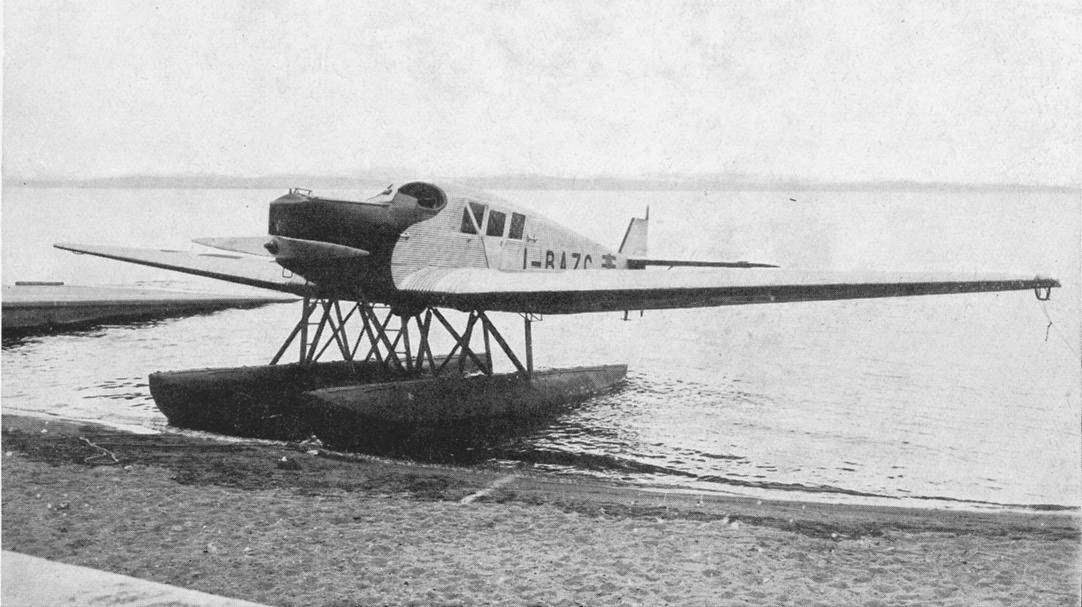
Giyȗ #7 Junkers F-13 Transport J-BAZG; loaned to the same airline as above.
Giyȗ #8 (1) Nakajima E2N2 Fisheries Floatplane J-BBUG; crashed 1930
Giyȗ #8 (2) Nakajima E2N2 Fisheries Floatplane J- BAB? (possibly J-BABK, but unconfirmed); replaced J- BBUG
Giyȗ #9 (1) Nakajima E2N2 Fisheries Floatplane J-BBYG; fate unknown
Giyȗ #9 (2) Nakajima E4N2 Fisheries Floatplane J-BABP; replaced J-BBYG. See here.
Giyȗ #10 Ishikawajima R-3 Trainer J-BEPB; donated to Nihon Gakusei Kôkȗ Remmei (Japan Students Aviation League)
Giyȗ #11 Nakajima E4N1 Transport Floatplane J-BERG; loaned to airline Tôkyô Kôkȗ Yusô Sha (Tokyo Air Transport Company). See also here.
As the Association appears to have done little other than to pass on these aircraft (reportedly free of charge) as indicated, it would be interesting to know who set it up and what its purpose was. Also, whether it acquired any more aircraft than the 13 that I have managed to discover. Can anyone help here?
Peter Starkings

Monday, 10 November 2014

Mitsubishi Ka-14 by Samo Štempihar

Mitsubishi Ka-14 prototype, Kagamigahara test center, January-March 1935.
The model in 1/72 by Fine Molds/Modelgrafix is trouble free and a pleasure to build.
Samo Štempihar - Ljubljana, SLOVENIJA
 
I don't know about you guys but I really like this petit model by Samo.