Friday, 14 November 2014

Mitsubishi G3M2b "Rikko" by István Tekler

I'm sending some photos of my Hasegawa G3M2b "Rikko", built using some scratch items, Eduard PE and Miniworld Type 99 cannon.
István Tekler - Hungary

Excelent model István. Thank you very much for your contribution to our blog.


Wednesday, 12 November 2014

"Teikoku Kaibo Gikai" aircraft

Peter Starkings sent us a follow-up of our post about the "Civilian Nakajima E4N2":
 
The "Civilian Nakajima E4N2" posting on 15 October 2014 gave a fascinating insight into the early years of Japanese fish spotting. It also mentioned the aircraft concerned being named Giyȗ #9 and some further notes on use of the term Giyȗ (unusual in relation to fish spotting) might be of interest.
Numerous surplus/obsolete Nakajma navy aircraft were converted for civilian use and four of these were specifically designated Fisheries Floatplanes, all modified as indicated for J-BABP. The term Giyȗ was applied to them by the concern to which they were initially supplied, namely the Teikoku Kaibo Gikai (Imperial Maritime Defence Volunteer Association), where the term "loyalty and courage" is obviously more relevant. The Association obtained various types of aircraft as follows:
 
Giyȗ #1 Kawanishi K-8B Transport Floatplane J-TUST; loaned to airline Nippon Kôkȗ Kabushiki Kaisha (Japan Aviation Company Ltd.)
Giyȗ #2 Kawanishi K-8B Transport Floatplane J-TUTU; loaned to the same airline as above.
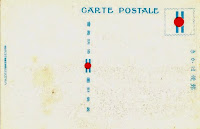
The back of the above postcard with
the marking of Teikoku Kaibo Gikai.


Giyȗ #3 Kawasaki Experimental Flying-boat; Tested by IJN, parts later used for materials research
Giyȗ #4 Kawasaki KDC2 Experimental Transport J-BAKH; loaned to Asahi Shimbun
Giyȗ #5 Kawasaki KDC2 Experimental Transport J-BALH; loaned to Asahi Shimbun
Although the J- registration is not all visible,
the inscription on the fuselage side
 confirms that this is indeed Giyȗ #5.  
Giyȗ #6 Junkers F-13 Transport J-BALG; loaned to airline Nippon Kôkȗ Kabushiki Kaisha (Japan Aviation Company Ltd.)
J-BALG before it was assigned to Teikoku Kaibo Gikai.
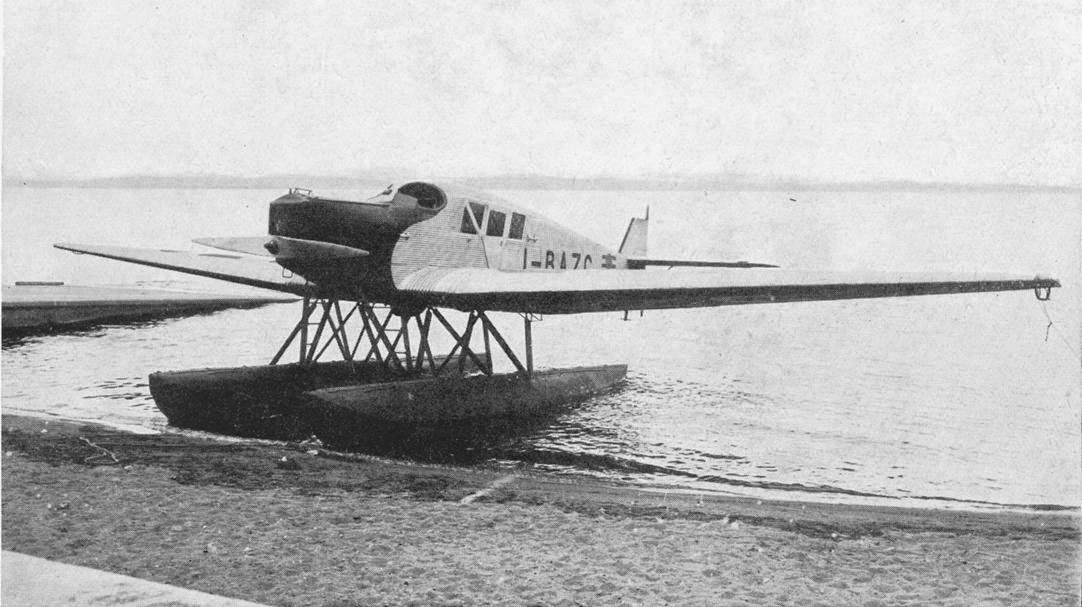
Giyȗ #7 Junkers F-13 Transport J-BAZG; loaned to the same airline as above.
Giyȗ #8 (1) Nakajima E2N2 Fisheries Floatplane J-BBUG; crashed 1930
Giyȗ #8 (2) Nakajima E2N2 Fisheries Floatplane J- BAB? (possibly J-BABK, but unconfirmed); replaced J- BBUG
Giyȗ #9 (1) Nakajima E2N2 Fisheries Floatplane J-BBYG; fate unknown
Giyȗ #9 (2) Nakajima E4N2 Fisheries Floatplane J-BABP; replaced J-BBYG. See here.
Giyȗ #10 Ishikawajima R-3 Trainer J-BEPB; donated to Nihon Gakusei Kôkȗ Remmei (Japan Students Aviation League)
Giyȗ #11 Nakajima E4N1 Transport Floatplane J-BERG; loaned to airline Tôkyô Kôkȗ Yusô Sha (Tokyo Air Transport Company). See also here.
As the Association appears to have done little other than to pass on these aircraft (reportedly free of charge) as indicated, it would be interesting to know who set it up and what its purpose was. Also, whether it acquired any more aircraft than the 13 that I have managed to discover. Can anyone help here?
Peter Starkings

Monday, 10 November 2014

Mitsubishi Ka-14 by Samo Štempihar

Mitsubishi Ka-14 prototype, Kagamigahara test center, January-March 1935.
The model in 1/72 by Fine Molds/Modelgrafix is trouble free and a pleasure to build.
Samo Štempihar - Ljubljana, SLOVENIJA
 
I don't know about you guys but I really like this petit model by Samo.


Sunday, 9 November 2014

Mitsubishi Ka-14 & 3MT5

A photo that often appears cropped featuring the very first prototype of the Experimental 9-shi Single Seat Fighter or Ka-14 next to one of the eleven prototypes of the Type 93 Attack Bomber or Ka-4 or 3MT5. 
  The first Ka-14 prototype was equipped with a "Kotobuki" Model 5 engine, flush riveting and inverted gull wings.
The 3MT5 was supposed to be carrier operated but by the time it was tested problems with the design and its slow development rendered it already obsolete. Only 11 were completed, and from the fifth prototype onward they had twin fins and rudders and additional struts.

Friday, 7 November 2014

Kawanishi H6K "Mavis" by Mark Jahsan WIP#4

Mark has made quite some progress. Below he is sharing some photos with us and explains the challenges he is facing.

This update is about the wing.
The first picture is the center section. I built in double spars on the bottom surface with some extra reinforcing where the center support struts will mount. There is an additional support on the top surface that fits between the two lower ones.
Second picture shows the same idea with the outer panels. A stub spar was made for the center section with the correct dihedral, with corresponding spars that will slot over it. You can also see the backing plate for the float mounts, and the tabs on the center section both top and bottom that will provide a gluing surface.
Third picture shows the fit of the outer wing panel when attached. The center slot had some 5 minute epoxy gooped in there, then slid over the spar and started gluing the surfaces. Because the ailerons were cut out, it made them very flexible, so I started at the leading edge and wrapped it back tight.
By the time it’s all done, you can hold the wing by one wingtip- it’s way overbuilt, but it’s mostly done with scrap so that’s OK! 
Last picture is another teaser to show size- the Sally fits under the wing, and the wingspan is about four Zeros.
Next project is the struts- the four in the center will be first, then the rest will be built on the plane so the lengths are correct. Wish me luck!
By the time we were about to post the above update, Mark sent us more photos of the progress he's made.
The first picture shows the beginnings of the wing mounts. I used two sizes of tubing, taped to both ends of a board. I squished them one at a time in a vise, flipping and checking size so they came out the same oval shape. The ends were then simply crimped with pliers to flatten them so they’d fit through the slots in the fuselage.
Second picture is an older one, showing the support shelves I built into the midsection. I was able to reach through the cockpit opening and glob some epoxy on the shelf for the struts. 
Third picture shows the struts installed and cleaned up. They should have fairings on them, but it’s clean now and I’d like to keep it that way!
Last picture shows the installed tail. Wing struts will be the same way, cut to the proper length then inserted into cut slots.
Next step is installation of the glass in the fuselage, then I can work on joining the wing.
 
Best of luck Mark with such a difficult project!

Tuesday, 4 November 2014

Nakajima G8N "Renzan" (Rita) #6 - Nipponki '46

The 20shi "Sozan" (Blue Mountain), known to the Allies as "Rose", was to be a very...very beefed up "Renzan" version. The concept and the artwork is from THIS site which is the ultimate what-if destination for unusual, fantasy and incredibly interesting J. planes but also tanks and ships. Check HERE for more on the "Sozan".
Don't tell me you don't feel like building one. I know I do.
 
The artist (wish I knew his name to give full credit) mentions that his inspiration for the design came from the Corvette, below, in the manga "Nausicaä of the Valley of the Wind".

Monday, 3 November 2014

Nakajima G8N "Renzan" (Rita) #5 - Model by Kalle Kindel

Kalle Kindel from Estonia bult this very beautiful "Rita"in 1/72. For more photos of the finished model and WIP visit HERE.


Sunday, 2 November 2014

Nakajima G8N "Renzan" (Rita) #4 - Kits

Hasegawa has released the same kit in 1/72 many times with different boxes. For the latest release check here.


There is also the AMT/Hasegawa kit but I know nothing about it.

And also a release by Frog.
All the above images from Scalemates.

In 1/144 there is a kit by AniGrand that includes a "Rita" and a few other Japanese X-planes.

In 1/700 there is a kit with many other IJNAF planes by PitRoad.

And finaly let's not forget the "Renzan" kit by Sankyo of unknown scale with the outageous cover.