Sunday, 25 January 2015

Special Hobby A5M2b "Claude" by Nicolas Renoult

Hi, 
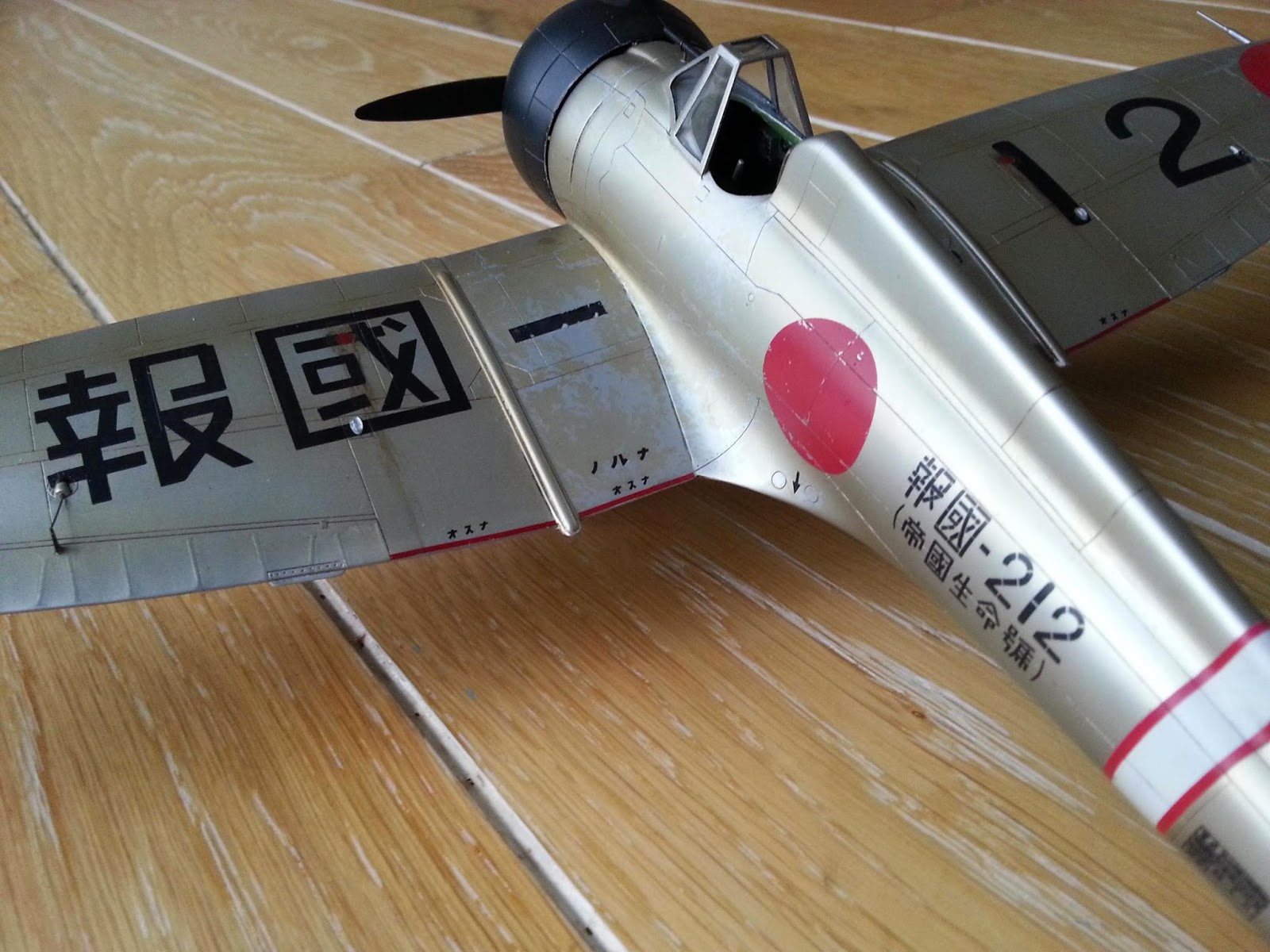
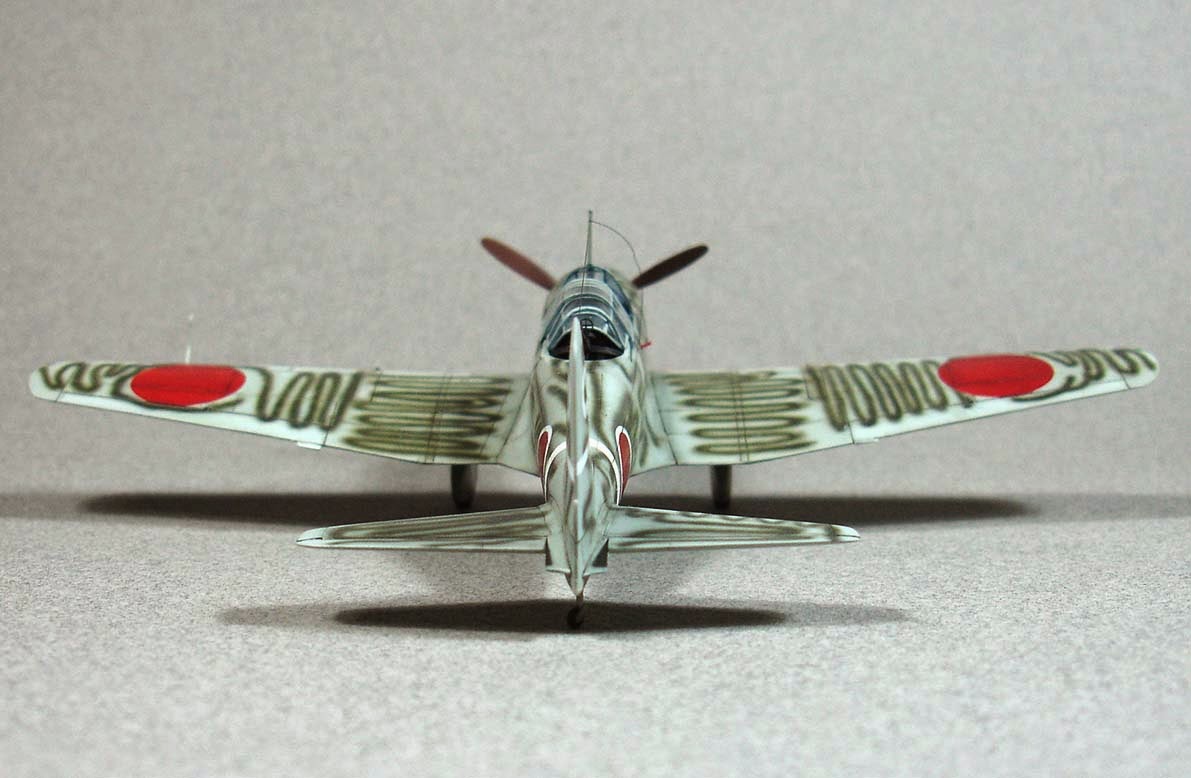
This is the last build I've finished. It is the Special Hobby A5M2b in 1/32, built OOB, with one of the 2 schemes from the box as well. It is a pretty good kit, with nice details, but not always easy to deal with. Indeed, there is a few traps and the instructions are not always clear. But with a bit of work you can get something nice. 
I've added a bit of details (especially wires) in the cockpit, and had to redo all the internal structure with styrene strips because the parts from the kit were unusable with the resin parts (it did not fit at all). The dials on the instruments panel are from MDC. I drilled the back bulkhead to make it hollow, and drilled some areas in the floor as well.
For the engine, I used the kit sparking wire, supplied as a PE part, but it look good. I've laid a few coats of Mr Surfacer with a brush on the wires to make them looking more tri-dimensional. I replaced the pushrods with 0.45mm nickel silver rods from Albion Alloy, which have been blackened with the Uschi burnishing solution (and it works, even if it is not brass). The cowling struts are made with 0.33 nickel silver rods, and I had to flatten one end in order to glue them on a tiny bracket glued on the engine crankcase. It is very fragile, but no choice.
As an early A5M based in China, I wanted to get this kind of golden color, and my own interpretation of it is that it is actually a tinted varnish (or a clear varnish that became yellow when weathered), certainly the same kind than the Ame-iro seen on the A6M's. The best way to get the same aspect was to get the same way. So I've started with a coat of alclad, and then a coat of custom made tinted varnish. The recipe is approximately 70-80% satin clear, 5-7% clear yellow, 5-7% clear orange and 10-15% smoke, and you should get something that is clear brownish. Just before spraying the varnish, I've used some AK chipping product, to make a few scratches and chips on the wing roots and cockpit sides.
Then I've used custom made masks for the hinomaru, and painted the tail with the same red (a mix of gunze flat red, vine red and a bit of insignia red). And then it was the drama.... Some paint (varnish + alcad) came off with the masks..... Usually, this kind of issue is not a big deal to repair, only a few touch-ups and everything is ok. But in this case, I have this varnish and it is impossible to make an invisible touch up, as the varnish is clear and any touch up would build it up and make it stronger and stronger around the peeled off area. So after a few days of thinking, I decided to mask all around the damaged area, to sand it clean and to repaint those area from scratch. The repair is not invisible, but I can live with it !
The decals from the kit are very good, and especially thin. That can even become a problem as they have a tendency to fold on themselves, and they become very sticky on the surface pretty fast, and then it is very difficult to make them move. I think micro set on the model before placing the decals must be avoided, but micro sol on placed decals is ok, and the decals react well.
Then the weathering was done with a wash of Flory model dark dirt to highlight the panel lines, and then some enamel AK washes, followed by a coat of satin varnish.
The exhausts have been painted with shades of rust colors with a coat of AK chipping product to make a kind of rust crust.

WIP: HERE, More photos: HERE
Nicolas Renoult - FRANCE


Friday, 23 January 2015

Vintage Japan-esque collection #2 Gliders

Very tired today after spending five hours at the National Diet Library of Tokyo, battered by very strong winds and quite cold weather. So a rather short posting today mainly with photos and whatever information we could gather. We promise to keep on searching for more.
 
First up is a set of excellent photos of a Kirigamine/Nippon "Taka" (Hawk) 1 soarer glider registered J-BADL. The marking behind the pilot is that of the Imperial Aeronautical Association but the very interesting tail marking eludes us for the moment. Markings of glider schools in Japan is field not researched by anyone AFAIK therefore it is very difficult to pinpoint which marking belonged to which school.
The writing on the tent is not very visible but it mentions that it belongs to a high-school. The sign in front says that this is a VIP area for Asahi Shimbun. 
 
A different photo in the collection is of a glider belonging to Asahi Shimbun.
 
There is no list of the gliders belonging to the newspaper (if in fact there were more than one) but the one known is called "Asahi Type soarer Model 1" shown below. It was completed and test flown for the first time on May 25, 1935 in Haneda airport. The test pilot was Kawauchi Kazuhiko and in my eyes bears a resemblance to the pilot in the above photo. Clearly there is a difference in the shape and size of the nose, not of the two pilots but of the two gliders but the rest of the visible details, cockpit shape etc, are very similar. Perhaps a Type 2 or a modification after an accident?

Wednesday, 21 January 2015

Under New Management by Derek Cooper

Derek Cooper from England shared his "Under New Management" collection of Kawasaki Ki-61 "Hien" and explained:
 
Ki-61-I Tei discovered by US forces at Kadena Airfield Okinawa, repainted and used by VMH 322 as a "flying toy". Hasegawa 1/72 scale kit with decals by Max Models (their reprint of Rising Decals' Dying Sun sheet). The decal set is available from Arawasi, check HERE.

 
Ki-61 Ko/Otsu operated by the Chinese Nationalists after the end of the Pacific War. Dragon 1/72 scale kit (decals included). I have used some artistic licence here because the upper surfaces of the wings may have been plain NMF, but I couldn't resist camouflaging them!


Thanks a lot Derek. Hope to see more soon!

Tuesday, 20 January 2015

Vintage Japan-esque collection #1

An anonymous fan of our blog left a comment on a previous glider posting sharing with us some of the original photos in his collection asking for further information.
So we are starting this series of postings with as much as possible details.
First up are the three aircraft types seen in some of the photos.
 

The aircraft in the above photos is a Klem L.25 the sole example of which was brought to Japan in September 1935 when the renowned German glider pilot Wolf Hirth visited the country. He gave lectures and performed glider demonstrations in many places around Japan. Japanese sources mention that he arrived with a tow pilot and a mechanic. Their names were Karl Bower an Hans Stolz respectively (not sure about the spelling). In the lower photo a non-Japanese individual is seen looking in the cockpit of the Klem. He is probably Karl Bower.
Hirth left the plane in Japan, it was evaluated by the IJAAF and was then given to the "Nihon Hosho Hiko Renmei" (Japan Glider Association Society) of the Osaka-Mainichi newspaper becoming the 30th aircraft in their fleet. It received the registration J-BACB.

Wolf Hirth is giving a lecture at the Aviation Centre of the Imperial Aeronautic Association on October 7, 1935. The subject as seen on the board is "climbing speed".

Hirth is shaking hands with the Minister of Communication at the time Mochizuki Keisuke (served 12/9/1935 ~ 9/3/1936).
 
From Baron #1: "On 4th December Wolf Hilth flying in his Göppingen 1, towed by the Klem, took off from Tokyo Haneda airfield for Nagoya and later landed at Nagoya. The next day he arrived at Tatetsu airfield in Osaka. This was the first long distance flight for glider using aero-towing in Japan a total of 420km." The photo above is taken right after his arrival in Osaka where tens of thousands of people were waiting for him. 
 
The second aircraft is a British-Klemm Eagle.

 
On May 12, 1935 Japanese pilot Ano Katsutaro took off from London's Heston Aerodrome and after numerous accidents and emergency landings arrived in Haneda on August 18 of the same year. He covered a distance of 16473km in 99 days. The aircraft was named "SEIKAI" (Blue Sea) and was original registered G-ADFB but the photo confirms that it was eventually registered in Japan as J-BOOB. In May 1936 it crashed during a sight-seeing flight over Nagoya seriously the pilot Ano and killing the passenger.
This means that the photos above were taken between August 1935 and May 1936 around the time when Hilth was in Japan.
The photos below are from the 1935 flight.

 
The final aircraft is a very rare photo of the second prototype of the Army Type 95-3 Trainer or  Ishikawajima Ki-17 as indicated by the number "1502" on the fuselage side. The main difference with the production type was that it had ailerons on both the upper and lower wings and therefore had one more extra strut between each wing. It was often used as glider tow.

Saturday, 17 January 2015

Mitsubishi Ki-51 "Sonia" by Alexandros Angelopoulos

A brilliant Mitsubishi Ki-51 "Sonia" belonging to the 10th Sentai, 1st Chutai, New Guinea 1944 by Alexandros Angelopoulos from Greece. Hasegawa 1/72.


Thursday, 15 January 2015

Nakajima J1N "Gekko"

We start this year with a photo of an unfortunate "Gekko". According to FAOW#57 it belonged to a small night-fighter unit attached to the headquarters of the 51 Koku Sentai. The accident happened in the summer of 1944 near Atsugi base when the early production Model 11 "Gekko" piloted by Flight Petty Officer Murozumi accompanied by reconnaissance Flight Petty Officer 2nd Class Ikeda experienced engine troubles. Both survived the crash-landing uninjured. The "741" on the tail is the marking of the night fighter unit of the 51 Koku Sentai.   
 
According to "Nihon Kaigun Yakan Gekigekisen" (A History of JN's Night-Fighter Units)* by Watanabe Yoji which is the ultimate book on the IJNAF night fighters, the accident occurred in June 1944 and the crew members were Flight Petty Officer 1st Class Murozumi Kenichi and Flight Petty Officer 2nd Class Ikeda Hidekazu. 
 
 
*Limited number of copies are available. Email us for details if interested.

Wednesday, 14 January 2015

Athens - Rome

Hey guys!
After a quite lengthy 3-week vacation we are back to our base in Japan. We spent the holidays with family and friends having a great time, good weather (mostly) and lots of traditional Greek food in Athens and a few wonderful days in Rome thanks to our friend Danilo Renzulli; grazie mille di tutto!
 
Apparently there are not many model shops in Rome left but on the first day we visited the excellent CM Modellismo.
 
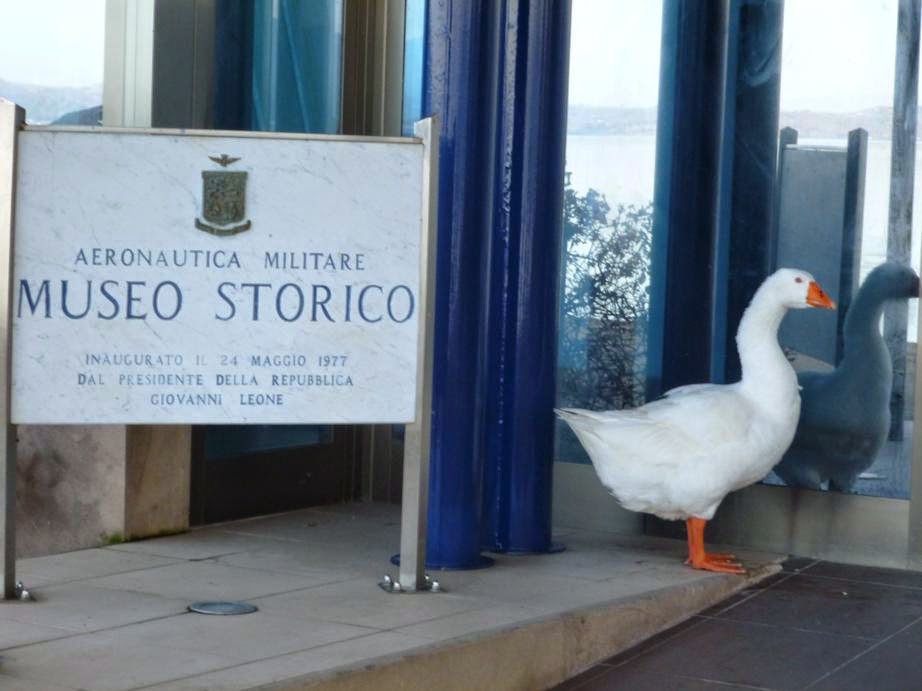
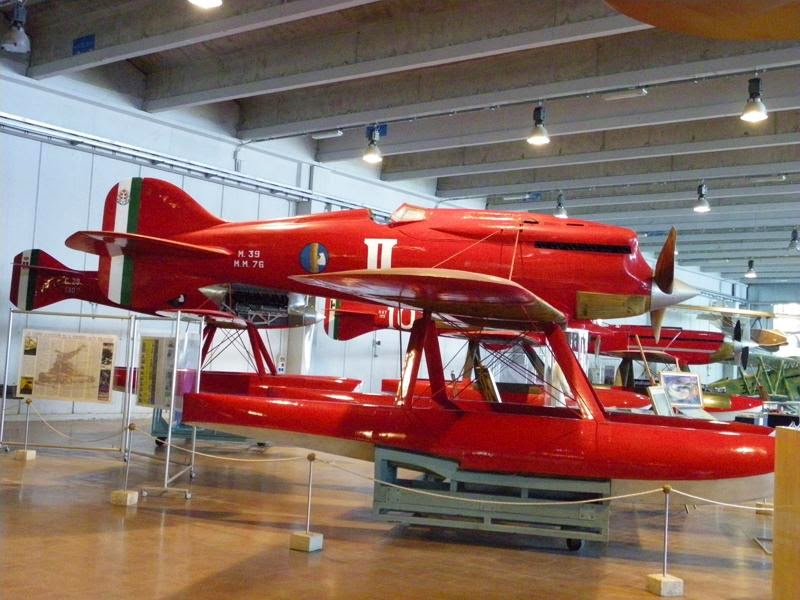
On the second day we visited the Italian Air Force Museum on lake Bracciano. Although the early-aviation room was closed to the public, their collection of Italian aircraft is simply amazing. We had a really great time and it was the first time I took so many photos of non-Japanese aircraft. It is definitely worth the visit but dress very well because it is painfully cold inside the museum.   


In Athens we went to the model shop area on Ippokratous street, saw friends at Kalfakis model store and bought a Valom "Willow" at Fasma. Kit review coming soon.


Hope everybody had a good time during the holidays and again we wish you all a very Happy New Year.
Lest we forget: Je suis Charlie